Your fleet modernization roadmap at a glance
- Manual processes create measurable revenue loss through vehicle underutilization and unbilled damage fees
- Centralized fleet management platforms serve as operational nerve center, consolidating contracts, availability, and invoicing across all locations
- Mobile apps (tablet check-ins, car sharing) complement core platforms by enabling field operations and 24/7 service
- Implementation ROI typically becomes visible within 6-12 months through utilization gains and fee recovery improvements
- Tool selection should match operation size and current bottlenecks rather than adopting comprehensive systems prematurely
When manual tracking becomes the bottleneck
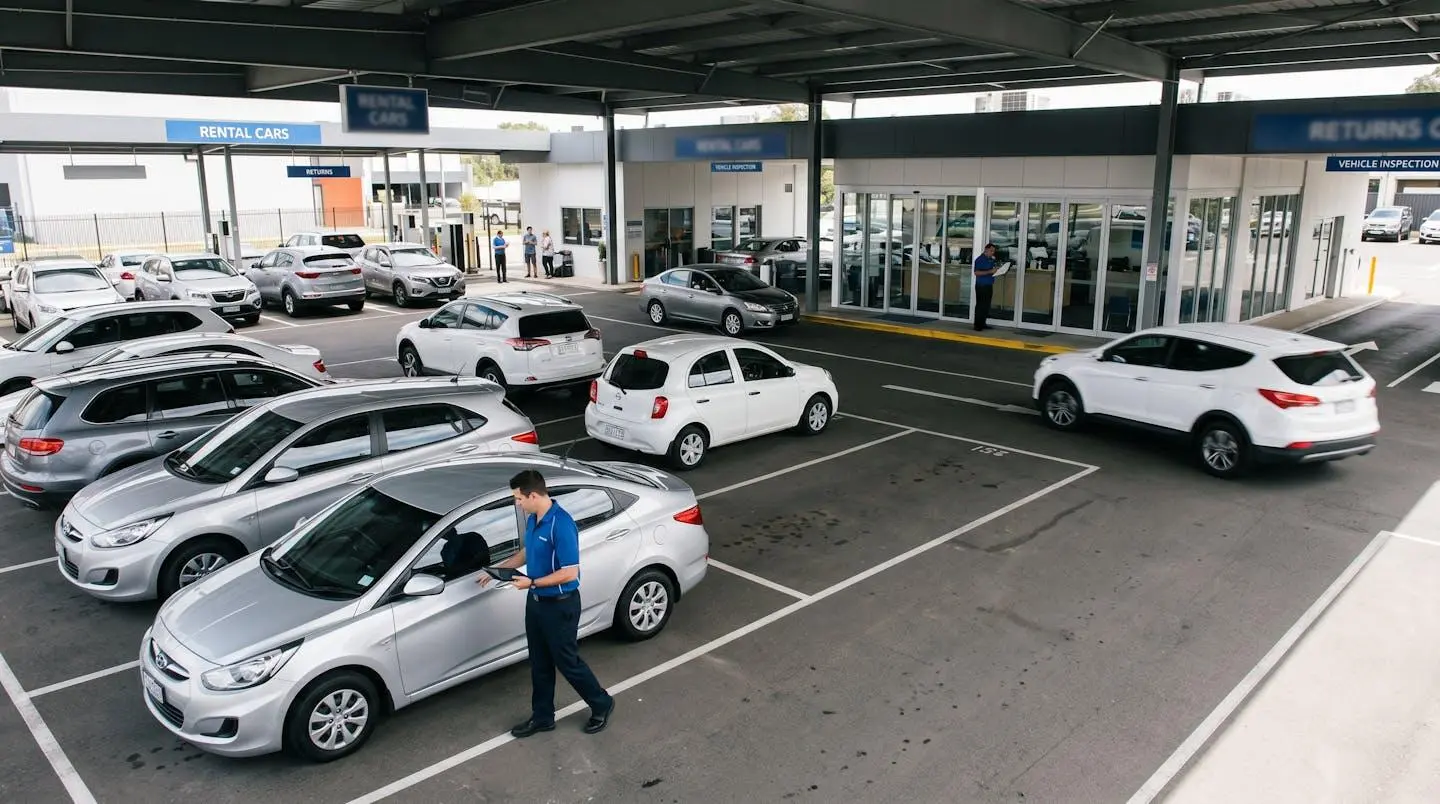
Rental companies operating across multiple locations frequently discover that their spreadsheet-based coordination systems quietly sabotage profitability. Consider a regional operator managing 100+ vehicles distributed across branch offices. Without real-time visibility into which vehicles sit idle at Location A while Location B turns away customers, the operation bleeds revenue from preventable lost rentals. Staff waste hours each day calling between branches to confirm availability, manually updating disconnected Excel files that go stale the moment a walk-in customer arrives.
The financial consequences accumulate through multiple channels. Vehicles sitting unused represent capital generating zero return—operations commonly report utilization gaps of 15-25 percentage points between manual spreadsheet-based systems and software-managed fleets. As Auto Rental News’ 2026 industry review documents, fleet planning and vehicle management have emerged as survival factors for independent rental operators. Manual coordination creates information silos where each location operates with incomplete data, making fleet-wide optimization impossible.
Damage documentation and check-in processes compound these inefficiencies. Paper-based inspection workflows make linking photographs to specific contracts a manual nightmare, leaving substantial damage fees unrecovered when operations cannot definitively prove when damage occurred. Traditional clipboard inspections consume 15-25 minutes per vehicle, creating customer wait times and staff productivity drains that multiply across hundreds of monthly transactions.
These compounding inefficiencies create the business case for centralized digital platforms—systems designed specifically to eliminate the coordination gaps and documentation failures that manual methods cannot solve at scale.
Software platforms that act as your operational nerve center
Centralized platforms address coordination bottlenecks by consolidating previously fragmented workflows into unified systems accessible across devices. Rather than maintaining separate tools for contract creation, availability tracking, invoicing, and reporting, modern fleet management softwares integrate these functions within cloud-based architectures that synchronize data in real time. When a customer completes a rental at one location, availability updates instantly propagate across all branches—eliminating the phone calls and manual spreadsheet edits that consume staff time under legacy approaches.
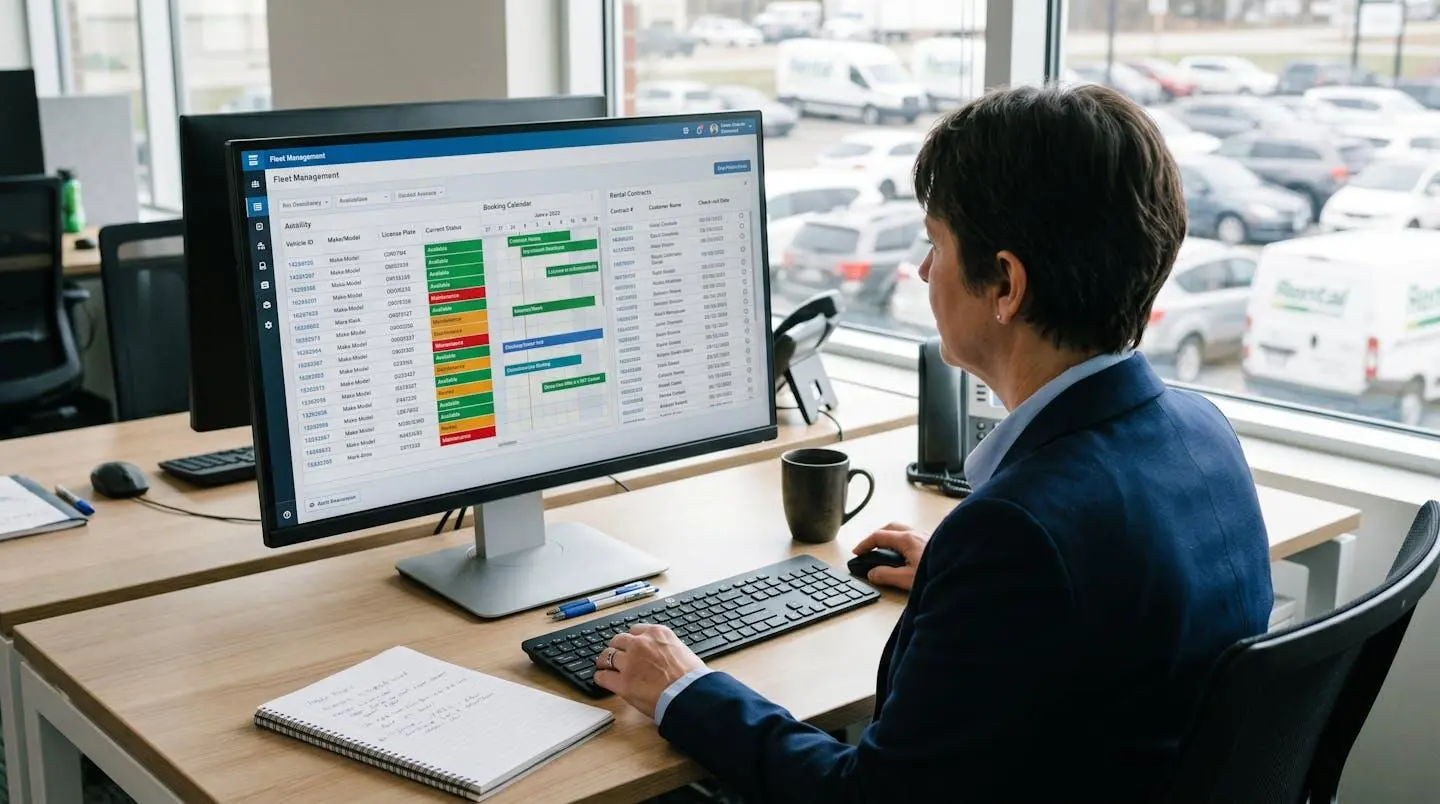
The business impact manifests across multiple performance dimensions. Operations implementing centralized platforms commonly observe vehicle utilization rates climbing approximately 20% as real-time availability visibility enables better fleet balancing across locations. Damage fee recovery similarly improves—digital documentation systems that automatically link inspection photographs to rental contracts help operations recover roughly 33% more in rebilled fees. These gains stem from platforms built on decades of industry experience; established solutions draw on 40 years of rental operations knowledge embedded in their workflow design. These gains assume operations have baseline data quality and staff process adherence—platforms amplify existing operational discipline rather than creating it from chaos.
- Contract creation and digital signature capture directly from customer interaction
- Real-time vehicle availability visibility across all locations with automated inventory updates
- Damage documentation linking (photos from check-in apps automatically attached to customer records)
- Automated invoicing with damage fee calculation and rebilling workflows
- Maintenance scheduling with service history tracking and predictive alerts
Modular architectures allow incremental functionality adoption—operations might begin with contract management and availability tracking, then expand to invoicing and reporting as staff adapt. SaaS delivery models eliminate installation complexity, enabling browser-based access from any device without infrastructure investment.
Mobile connectivity: managing fleets from anywhere, anytime
Tablet-based inspection applications transform check-in and check-out workflows from manual documentation bottlenecks into streamlined digital processes. Staff conducting vehicle inspections with mobile devices photograph damage, record odometer readings, and capture customer signatures directly within the application—no paper forms, no disconnected cameras, no post-rental data entry marathons. Operational data indicates these digital inspection tools reduce processing times by approximately 50% compared to clipboard-based methods, cutting the typical 15-25 minute check-in down to 7-12 minutes.
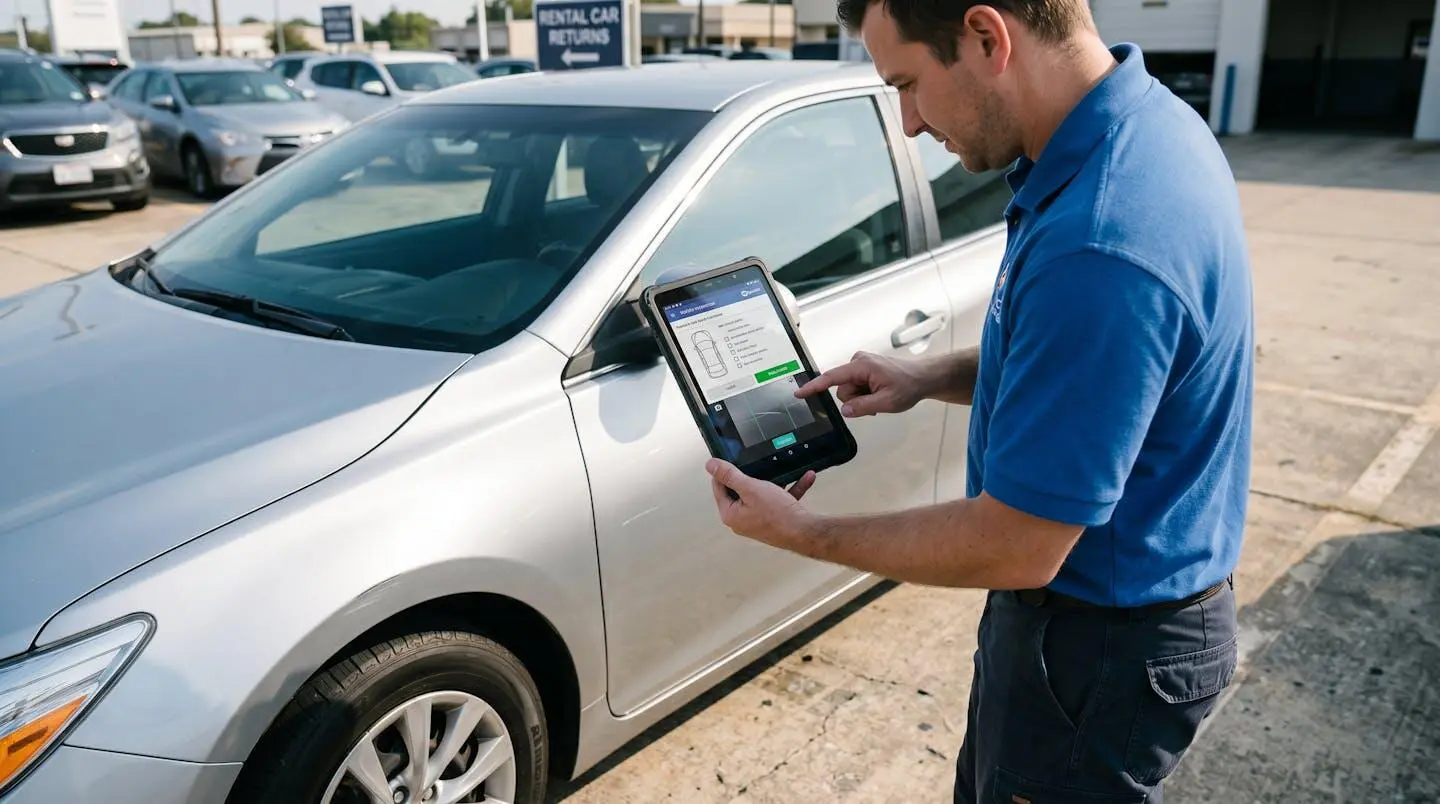
The efficiency gains extend beyond speed. Photographic evidence timestamped and GPS-tagged at the moment of inspection creates legally defensible documentation that dramatically reduces customer disputes over damage charges. When renters see clear photographs showing pre-existing scratches documented at pickup, arguments over responsibility evaporate. This documentation quality directly explains the substantial improvement in damage fee recovery rates. Tablet inspection apps deliver fastest ROI when staff turnover is low; operations with high seasonal workforce churn may face recurring training overhead that delays payback.
Car sharing platforms represent mobile technology’s most ambitious application—enabling completely unattended 24/7 vehicle access through smartphone apps and connected vehicle systems. Customers reserve vehicles through mobile applications, unlock doors via Bluetooth or keypad codes, and complete entire rental transactions without staff interaction. The broader transportation trends in mobility demonstrate how automation and connectivity reshape consumer expectations around access and convenience. These self-service systems maximize fleet utilization by eliminating operational hour constraints—vehicles generate revenue during evenings, weekends, and holidays when traditional rental counters sit closed.
IoT connectivity adds another operational dimension through real-time vehicle monitoring. Growth trajectory highlighted in the IMARC Group 2025 sector report shows the IoT fleet management market expanding from USD 20.4 billion in 2024 toward USD 97.7 billion by 2033. Connected telematics track location, monitor diagnostics for predictive maintenance, and automatically record mileage—enabling proactive service scheduling before breakdowns occur.
Frequently asked questions about fleet management tooling
What fleet size justifies investing in comprehensive management platforms versus targeted mobile tools?
Operations managing 50+ vehicles across multiple locations typically see fastest ROI from integrated platforms due to coordination complexity. Smaller fleets (10-30 vehicles, single location) often benefit from starting with mobile check-in apps before expanding to full systems. Fleets under 15 vehicles may find manual systems adequate if operating single-location with stable staff.
How long does staff training take for digital check-in tools and fleet software?
Tablet-based inspection apps require 2-4 hours of hands-on training due to intuitive interfaces. Full platform training spans 1-2 days for daily users, with ongoing support during the first month.
Can fleet software integrate with existing accounting systems and payment processors?
Modern fleet platforms provide API integration with major accounting software (QuickBooks, Sage, Xero) and payment gateways. Integration complexity depends on legacy system age—cloud-based accounting systems typically connect within days, while older on-premise systems may require custom development.
What is the realistic ROI timeline for fleet management software investment?
Rental companies commonly observe measurable improvements within 6-12 months through increased utilization, improved damage fee recovery, and reduced administrative time. Evaluating ICT innovations for smarter operations to identify which genuinely transform rental businesses requires balancing upfront investment against operational gains. Full cost recovery typically occurs within 18-24 months.
How do mobile apps function in areas with unreliable internet connectivity?
Quality mobile fleet apps include offline functionality, allowing staff to complete inspections and capture photos without connectivity. Data synchronizes automatically when connection is restored.
The rental operations landscape continues evolving toward integrated digital ecosystems where centralized platforms, mobile field tools, and connected vehicles work as unified systems rather than disconnected point solutions. Operations that approach this modernization strategically—matching tool sophistication to actual operational complexity and building staff capability progressively—position themselves to capture the substantial performance gains that industry data consistently demonstrates.